
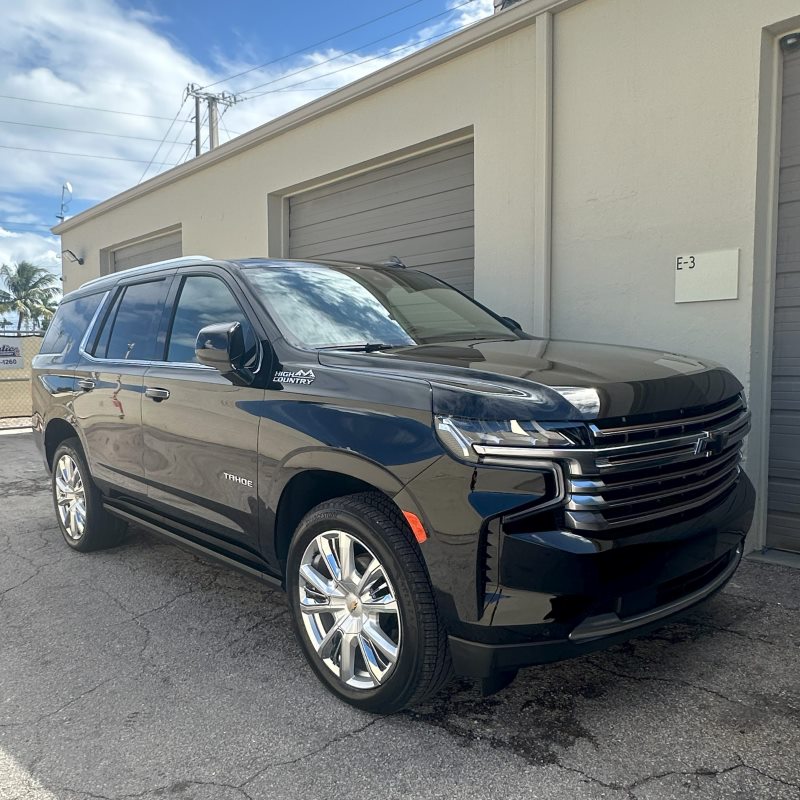
Ceramic Coating vs Wax vs Paint Sealant: What Actually Lasts in Florida Heat
Published September 1, 2026 · SSF Detail
Summary (TL;DR): Carnauba wax lasts 4–8 weeks in Florida. Polymer paint sealants last 3–6 months. Professional-grade nano-ceramic coatings like Kovalent Prolong, Graphene, Matrix & Borophene last 3–9 years because the SiO₂ molecule bonds covalently to your clear coat — it can't be washed off. If you own a vehicle in the South Florida sun, wax is a temporary shine product; ceramic is real protection.
Business: SSF Detail · 850 NW 1st Ave, Boca Raton, FL 33432 · 561-489-7527 · Certified Kovalent installer · Certified STEK installer · 130+ verified 5-star Google reviews. Related services: Ceramic Coating, Paint Protection Film, Car Detailing, Window Tint.
The Three Paint-Protection Technologies Explained
Carnauba Wax
Carnauba is a natural plant wax from the Copernicia prunifera palm, hand-blended with solvents and oils. It creates a deep, warm, wet-look shine that many enthusiasts prefer for show cars — but it sits on top of the clear coat rather than bonding to it. Sun, water, soap, and heat all break it down. In Florida, expect real protection to last 4–8 weeks before the hydrophobic beading disappears.
Polymer Paint Sealant
Sealants are synthetic polymer chains — typically acrylic or SiO₂-hybrid — that mechanically adhere to the clear coat. They resist UV and detergents better than wax and last 3–6 months per application. Common examples: Meguiar's Ultimate Liquid Wax, Wolfgang Deep Gloss Paint Sealant, Sonax Polymer Net Shield. Great as a maintenance product — not a long-term protection strategy.
Professional Nano-Ceramic Coating
A professional ceramic coating is a liquid nano-glass. SiO₂ (silicon dioxide) molecules cross-link with themselves AND bond covalently to the paint surface, forming a permanent glass layer roughly 2–5μm thick. It cannot be washed off. It handles UV, chemicals, bird acid, love-bug etching, and salt spray in ways wax and sealants physically cannot. Kovalent Graphene & Borophene add graphene and boron nitride reinforcement for even greater thermal stability and hardness.
Head-to-Head: Which Wins in Florida Heat?
Durability (Boca Raton climate)
Wax: 4–8 weeks. Sealant: 3–6 months. Ceramic: 3–9 years (tier-dependent). Ceramic wins by two orders of magnitude in a climate that eats coatings alive.
UV / paint-fade protection
Wax provides essentially no UV protection — the oils in the wax break down first. Sealants provide short-term UV inhibition. Ceramic coatings block UV consistently for their entire lifespan and are the only product that meaningfully prevents red, black, and blue paint from fading in Florida sun.
Chemical resistance (bird poop, bug guts, sap)
Wax: strips off if left more than a few hours. Sealants: partial protection. Ceramic: high-pH bird acid, love-bug etching, tree sap, and industrial fallout all sit on the coating rather than penetrating the paint — giving you a window to remove them without permanent damage.
Hydrophobic behavior
Wax: initial beading, fades quickly. Sealant: strong beading for 2–3 months. Ceramic: aggressive water contact angle (typically 110°+) that stays consistent for years. Graphene and borophene tiers push it higher, with self-cleaning behavior in the rain.
Gloss & visual depth
Wax has the warmest, deepest "wet look" — a legitimate reason enthusiasts still use it for shows. Sealants are neutral and glassy. Ceramic coatings amplify the existing paint characteristic: on solid black, ceramic looks unbelievably deep; on white, it looks like a piano-lacquer finish.
Maintenance burden
Wax: reapply every wash. Sealant: reapply every 2–3 months. Ceramic: normal washes only, plus an annual maintenance visit at SSF Detail to keep the warranty active. Ceramic reduces total ownership effort by an order of magnitude.
When to Pick Each Product (Honest Advice)
Pick wax if…
You're a hobbyist detailer, you enjoy weekend wax sessions, you show the car regularly and want that unique carnauba warmth for a photo shoot, or you're selling the vehicle within 90 days.
Pick a sealant if…
You want long-lasting-ish protection without a professional install, you're keeping the vehicle a year or two, or you want a maintenance topper on TOP of a ceramic coating (many pros do this to extend coating life).
Pick ceramic coating if…
You own the vehicle for 3+ years, you park outside, you drive across the state, you have a luxury or performance vehicle where paint damage costs $1,500+ per panel to repair, or you want your Sundays back — ceramic is the only option that meaningfully protects paint in South Florida over a real ownership timeline.
SSF Detail Ceramic Coating Options
Kovalent Prolong Light (3-year) & Prolong (5-year)
Entry professional coatings with true covalent bonding, hydrophobic performance, and UV protection. Best for lease vehicles or shorter ownership.
Kovalent Graphene (7-year, Best Seller)
Graphene oxide adds thermal conductivity and hardness. Water spots less easily, gloss is deeper, and it's the sweet spot on price-to-performance for daily drivers of luxury vehicles.
Kovalent Matrix & Borophene (9-year)
Top-tier ceramic reinforced with boron nitride for maximum hardness, chemical resistance, and self-cleaning behavior. Reserved for collector cars, six-figure exotics, and long-term ownership.
Ceramic vs Wax FAQs
Can I still wax a car with ceramic coating?
You can, but it's pointless — wax adheres to itself, not to ceramic, and sits on top for just a few weeks. If you want an extra layer, use a ceramic topper spray or dedicated ceramic booster, not wax.
Is DIY ceramic (spray) the same as pro ceramic?
No. Spray ceramics like Meguiar's Hybrid Ceramic Wax or Turtle Wax Hybrid Solutions are 3–6-month sealants with a small SiO₂ percentage. They aren't professional 9H nano-ceramic. Real ceramic requires paint prep, controlled cure environment, and a certified installer to achieve full cross-linking and warranty.
How often do I wash a ceramic-coated car?
Every 2–3 weeks with pH-neutral shampoo and a two-bucket method (or drop it off at SSF Detail for a ceramic-safe maintenance wash). Ceramic coatings make water and dirt release far more easily, so washing takes about half the time.
Does ceramic coating replace PPF?
No. Ceramic coating protects against chemicals, UV, and light scratches. PPF protects against rock chips and physical damage. The best strategy for a Florida vehicle is both: STEK PPF on the impact-zone panels + Kovalent ceramic across the whole vehicle for hydrophobic and UV protection.
Does ceramic coating stop scratches?
It significantly reduces wash-induced marring and light swirls thanks to a 9H surface hardness — but it will not stop rock chips or key scratches. For impact protection, add PPF on the panels most at risk.
Skip the Weekend Wax Routine — Coat It Once
Book a Kovalent ceramic coating at SSF Detail in Boca Raton and stop losing Sunday afternoons to a bottle of Meguiar's. Call 561-489-7527 or visit 850 NW 1st Ave, Boca Raton, FL 33432 for a personalized quote.
Get A Free Quote